The global robotaxi industry has entered a new era, one defined by the tangible formation of new value chains. The…
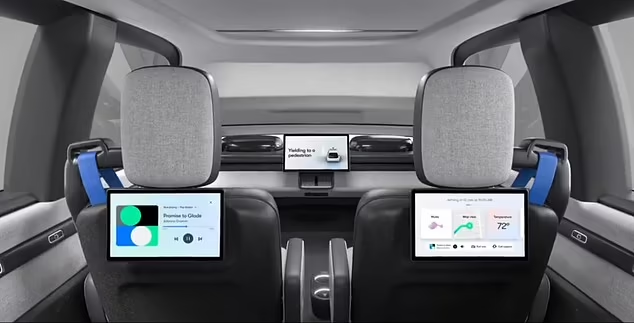
I recently participated in an on-stage discussion about the state of autonomous mobility at the Ride AI Summit in Los Angeles. During the event, I engaged in several conversations with other participants about the robotaxi customer experience. The essence of these discussions reaffirmed what I’ve long maintained—customer experience, rather than just vehicle technology, will determine the winners in the next phase of mobility.
The automotive industry’s path to new mobility has been slow and full of challenges, many created by the automakers themselves, that will not disappear in the new year or even the near future. Many of these challenges emerged in the last couple of years, while the impact of others that existed longer was only recently understood and appreciated. Geopolitics, tariffs, new regulations, labor unrest, increasing competition from Chinese automakers, and decreasing sales, including in China, make up the list.
Robotaxis and autonomoustrucks are the two autonomous vehicle use cases that receive the most attention. AI is a key enabling technology for both. To achieve the determinism required in mobility, #AV software platforms incorporated a combination of statistical and symbolic AI. A new crop of AV startups, led by Wayve and Waabi, received large financing rounds for their “end-to-end” deep neural network approaches similar to those used in generative AI. Could these approaches result in vehicles that are cheaper to produce and operate than those utilizing the approaches used to date, adhere to regulations, and be accepted by autonomous vehicle users?
There is no question that the pandemic is having a big impact on new mobility. Passenger transportation is down as reported by the dramatic decreases in public transportation ridership and mobility services rides. At the same time, goods delivery services are growing fast as more households are adopting Ecommerce. With these changes as a backdrop and realizing that many of them will stay with us post pandemic, what innovations and news are worth paying attention to?