Beyond the ETA: The Context-Dependent Robotaxi CX

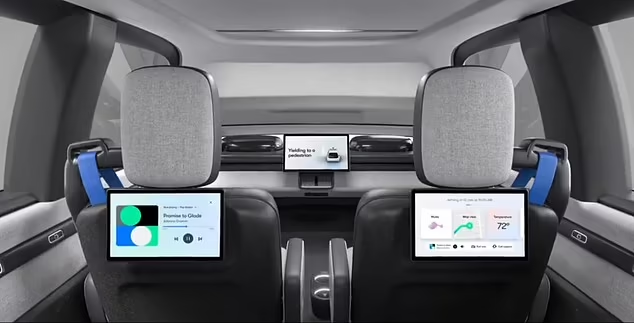
Autonomy is table stakes, and supply-side orchestration, which Uber is already winning, is becoming table stakes too. The next differentiator in robotaxi customer experience is demand-side. Namely, a system that anticipates each traveler’s intent (route risk, speed-versus-safety trade-offs, the right mode for the moment) and orchestrates the trip to satisfy it. I call this Context-Dependent Ride Management. It is the layer where the premium, monetizable, flagship customer experience will be built.
Continue Reading →

Robotaxis: Beyond Autonomy, It’s About Superior CX

I recently participated in an on-stage discussion about the state of autonomous mobility at the Ride AI Summit in Los Angeles. During the event, I engaged in several conversations with other participants about the robotaxi customer experience. The essence of these discussions reaffirmed what I’ve long maintained—customer experience, rather than just vehicle technology, will determine the winners in the next phase of mobility.

Continue Reading →

Big Data and AI In New Mobility

AI is viewed by many exclusively as a prediction technology. The availability of large, diverse, and information-rich data sets combined with the power of neural networks, and more recently with the addition of Foundation Models and Large Language Models, has been responsible for achieving incredible results even in complex, multi-faceted situations. Every aspect of new mobility has benefited from AI’s prediction power. New mobility will continue to reap even more impressive rewards. Getting there will be accomplished as new mobility’s AI systems play three roles.

Continue Reading →

Transformations for Legacy Mobility Services Companies

One of the main theses developed in Transportation Transformation is that, though still young, the app-based on-demand mobility services companies will need to transform before they can fully capture the opportunity afforded by new urban mobility. The book presents the decisions such companies must make and a framework that prescribes specific transformations consistent with these decisions. For some, the transformation has already begun. But will these decisions and transformations be equally applicable to legacy on-demand transportation companies and help them compete more effectively against their app-based disruptors?

Continue Reading →

Linking Mobility to Work from Home

Several megatrends will necessitate the transformation of urban mobility from one that is centered around the privately owned vehicle to one that is offered as a service, combines multiple modalities, and promotes sharing. The pandemic forced many of us to work from home and have goods delivered there, in the process causing us to rethink our mobility needs and practices in the context of urban travel. Work-related mobility deserves important consideration because about 30% of daily urban trips pre-pandemic were related to commuting. Many of the practices that will emerge from this rethinking will have their roots to the changes we made during the pandemic and could lead to a new normal for urban mobility.

Continue Reading →