
The global robotaxi industry has entered a new era, one defined by the tangible formation of new value chains. The…
The global robotaxi industry has entered a new era, one defined by the tangible formation of new value chains. The…
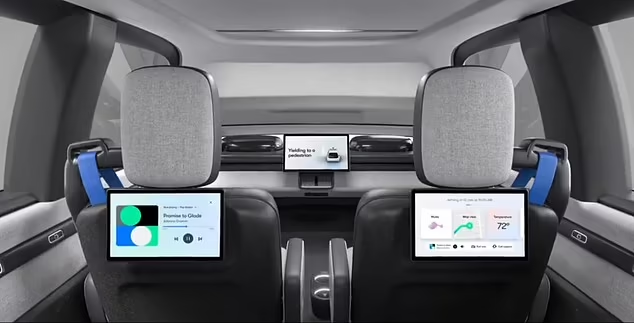
I recently participated in an on-stage discussion about the state of autonomous mobility at the Ride AI Summit in Los Angeles. During the event, I engaged in several conversations with other participants about the robotaxi customer experience. The essence of these discussions reaffirmed what I’ve long maintained—customer experience, rather than just vehicle technology, will determine the winners in the next phase of mobility.

Just before the holidays, I was asked to keynote an event sponsored by the German American Chamber of Commerce. This article is an updated version of that presentation. It is even more relevant today following CES 2025 and the news streaming out of Europe. The automotive industry, especially the European automotive industry, faces even greater challenges. These challenges are not from technology startups but from more formidable forces. China has become an international competitor, and its market is no longer an opportunity for incumbents. Vehicle sales, including sales of battery electric vehicles, are slowing, leading many companies to miss their financial targets and reconsider previously announced investments relating to electric vehicles. The regulatory environment is becoming more restrictive but also less reliable in terms of long-term goals and guidance for the industry. At the same time, Software-Defined Vehicles and AI require large capital investments at a time when the industry is cutting costs and continues to show an inability to deploy capital in the areas that will matter in the future. Labor is reacting to the automakers’ actions and introducing new work-life balance demands.

The automotive industry’s path to new mobility has been slow and full of challenges, many created by the automakers themselves, that will not disappear in the new year or even the near future. Many of these challenges emerged in the last couple of years, while the impact of others that existed longer was only recently understood and appreciated. Geopolitics, tariffs, new regulations, labor unrest, increasing competition from Chinese automakers, and decreasing sales, including in China, make up the list.

Most of you know our firm from its investments in early-stage AI software startups and as an AI advisor to corporations. Few know about the AI systems we have been developing and how we use them with our corporate customers or in new startups we spin out. Over the past several years we have been working on a class of AI-based mobility intelligence systems that are used for understanding a population’s mobility behavior within a region, such as a neighborhood, a city, or even an entire state. We found that neurosymbolic systems that incorporate generative AI components can be extremely effective in understanding such behaviors and providing their users with mobility intelligence.