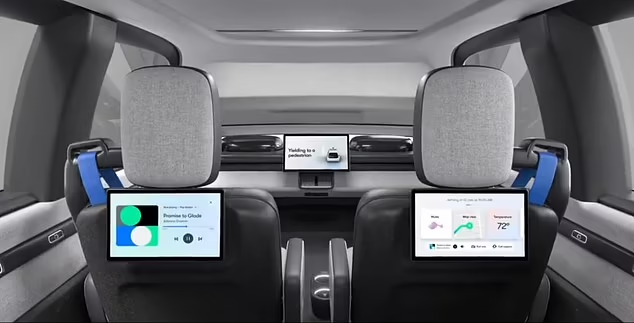
I recently participated in an on-stage discussion about the state of autonomous mobility at the Ride AI Summit in Los Angeles. During the event, I engaged in several conversations with other participants about the robotaxi customer experience. The essence of these discussions reaffirmed what I’ve long maintained—customer experience, rather than just vehicle technology, will determine the winners in the next phase of mobility.
AI’s allure is undeniable, and businesses invest heavily in its promise. Companies today invest significant amounts into generative AI initiatives. This pursuit is fueled by AI’s potential to improve productivity, cut costs, and unlock new opportunities that may create new revenue streams. However, many companies find the path to successful AI challenging because of fundamental mistakes in their approach.
The road to new mobility will not be a straight line. The twists and turns we encounter and will continue to encounter, will come as the result of economics, business models, industrial policy, politics, national security, but also culture. Mobility is impacted by at least three cultures: the automakers’, the dealers’, and the customers’.
Automakers want to capture a larger percentage of their customers’ lifetime value than they do today. To achieve their goal, OEMs must establish direct relationships with their customers, create new customer experiences, capitalize on the capabilities of their Software-Defined Vehicles, and utilize AI to better understand their customers’ behavior so that they can match their needs to the services they offer.
Last week I attended Ford’s Capital Markets Day. Ford held the CMD to report on the progress of its three…


